
EDGE REST / PORT 80
/api/calibration · /api/dsp · /api/meterCalibration, electrical context and runtime DSP configuration.PumpSpectra™ / Rotating Equipment Intelligence
PumpSpectra is the first condition-intelligence product built on SIIP. It turns non-invasive synchronized electrical signals into physics-gated MCSA-EDA, stable asset state and explainable maintenance intelligence for motors, pumps and the systems they drive.
Developed through the I+D+I program of Industrias Metalúrgicas EXCEL, C.A., on the SIIP architecture.
One evidence chain
Built on the SIIP signal-to-decision architecture, PumpSpectra keeps the complete path traceable. Every conclusion can be followed through context, fault gates and temporal state to the synchronized waveform.
Capture IA, VA, IB, VB, IC, VC and neutral together at 32 kS/s, aligned to a measured grid zero crossing.
Bind the waveform to calibration, meter data, DSP context, motor poles, speed and exact bearing geometry.
Run deterministic C++ FFT and MCSA with physics gates, noise evidence and multi-signal corroboration.
Store the evidence, stabilize state over time and let bounded local AI communicate the approved maintenance action.
Intelligence at the asset
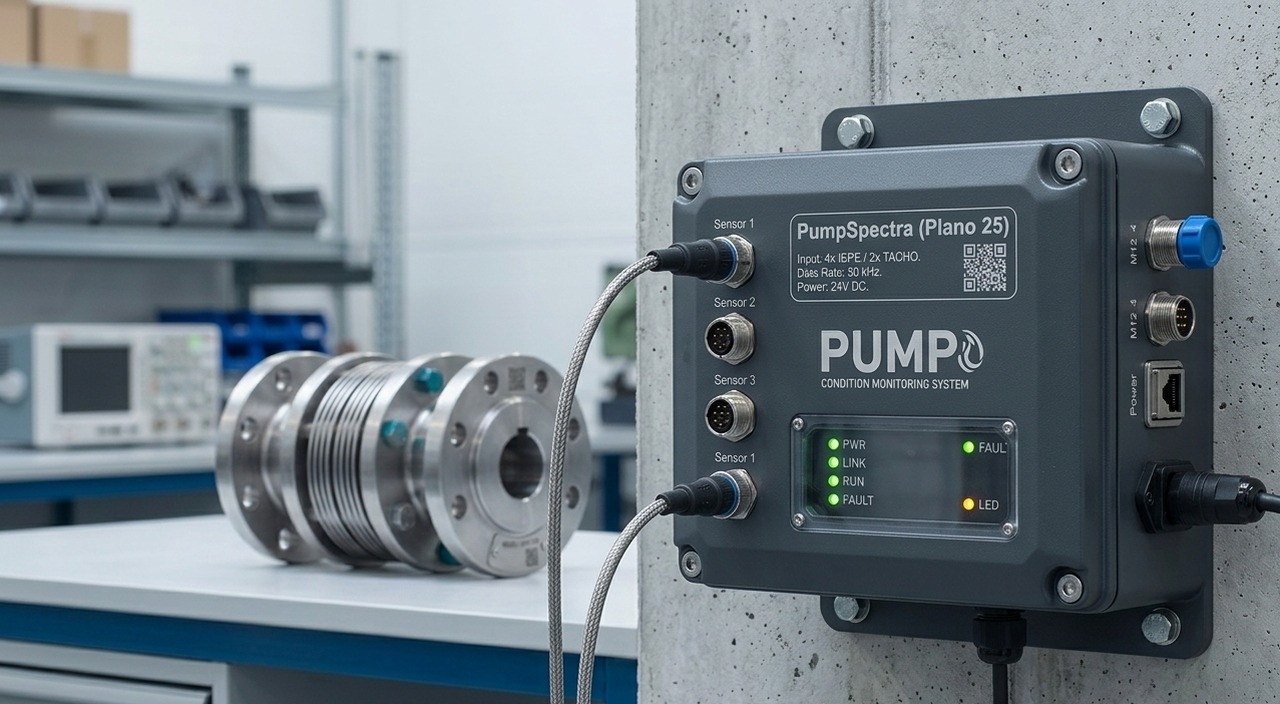
The reference acquisition design routes three voltage channels, three phase-current channels and one neutral-current channel through RF and anti-alias filtering into the ADE9000. The ESP32-S3 edge node performs real-time DSP and streams calibrated context and synchronized waveforms; the host CPU/GPU core combines MCSA-EDA, full-band FFT, exact bearing geometry, rotor and stator sidebands, pump evidence and power-quality context without reducing the result to a black-box score.
EDGE REST / PORT 80
/api/calibration · /api/dsp · /api/meterCalibration, electrical context and runtime DSP configuration.WAVEFORM TCP / PORT 8080
INFO · CAPTUREVersioned 3,610-byte frames with 128 synchronized sets across seven channels.ANALYSIS CORE
motor_fft_cpu · motor_fft_gpuGlobal FFT, MCSA, fault competition, per-bearing and pump evidence in schema v2 JSON.SIIP DATA + STATE
MongoDB · health · historyMeasurements, spectra, alerts, temporal state and maintenance recommendations.Industrial deployment
PumpSpectra combines cabinet-level sensing, local processing, durable evidence and flexible communications in one field-ready workflow.
CT clamps or Rogowski coils acquire supply-side evidence without accelerometers on the machine or physical access to the rotating shaft.
Local MongoDB preserves synchronized captures, spectra, events and reports when external connectivity is limited or unavailable.
Ollama runs on site to translate deterministic C++ results into clear maintenance guidance; it cannot change the physics verdict.
Field deployments can use existing 3G/4G/LTE, VSAT or fiber links from the asset to the control room.
MCSA-EDA / Diagnostic map
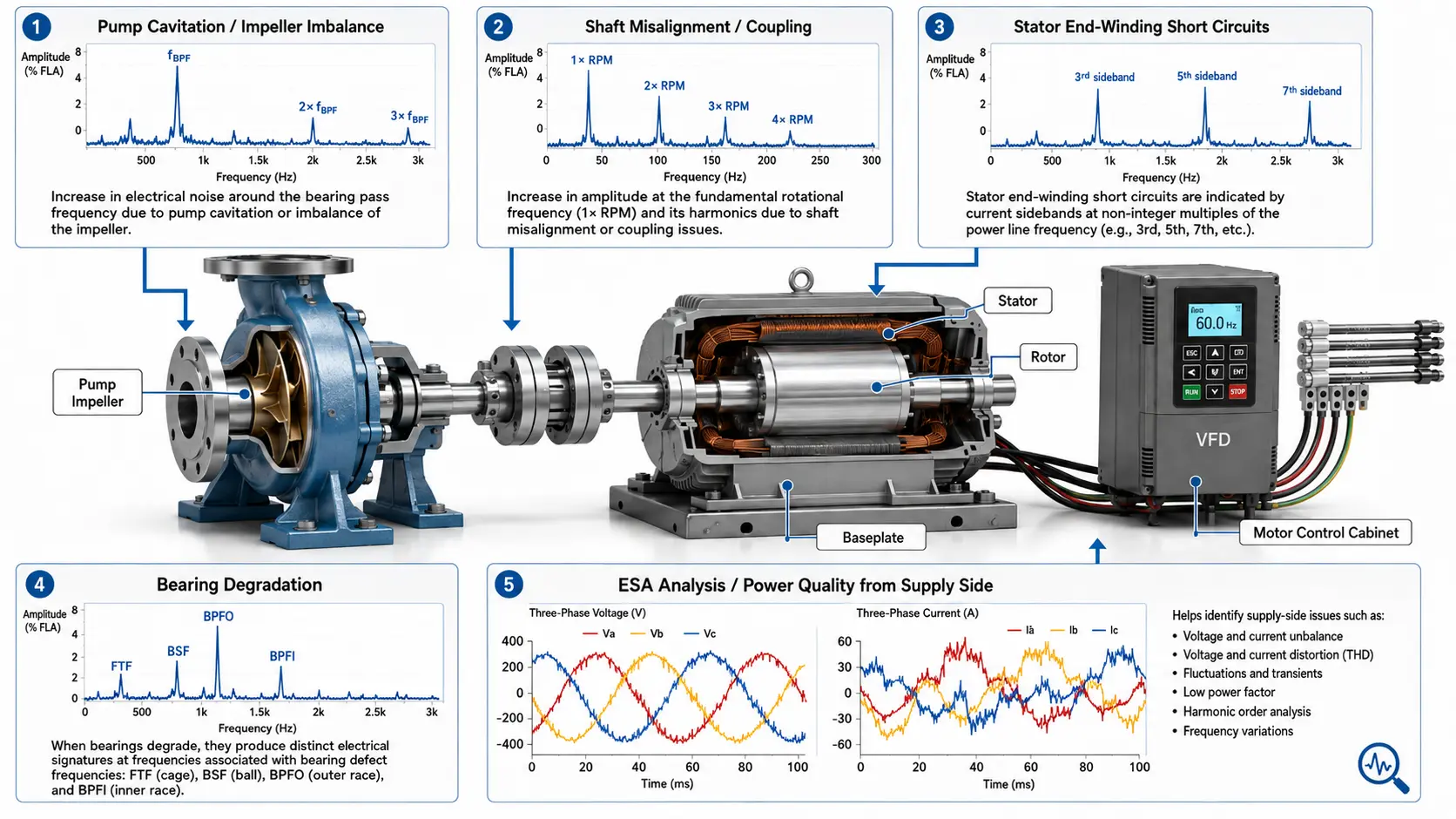
The revised engineering map connects five evidence families to the physical asset: pump and impeller, shaft and coupling, stator, bearings, and supply-side electrical quality.
Verified diagnostic scope
PumpSpectra does more than label a spectrum. It resolves competing signatures, records contamination and preserves the exact features that support—or prevent—a diagnosis.
Broken-bar and eccentricity sidebands are evaluated against refined f0, speed, slip validity and phase corroboration. Stator end-winding evidence is tracked through odd current sidebands rather than one isolated peak.
The 1× RPM fundamental and its 2×–4× rotational harmonics are evaluated with competing evidence so shaft misalignment, coupling issues, unbalance and looseness are not collapsed into one label.
BPFO, BPFI, BSF and FTF are calculated per bearing, with x2/x3 harmonic evidence, confidence and grid-contamination proximity.
Impeller blade count establishes fBPF; its harmonics, load imbalance and broadband electrical noise provide corroborating evidence for impeller imbalance and cavitation.
Current and voltage THD, phase imbalance, low power factor, harmonic order and frequency variation separate supply-side conditions from asset behavior.
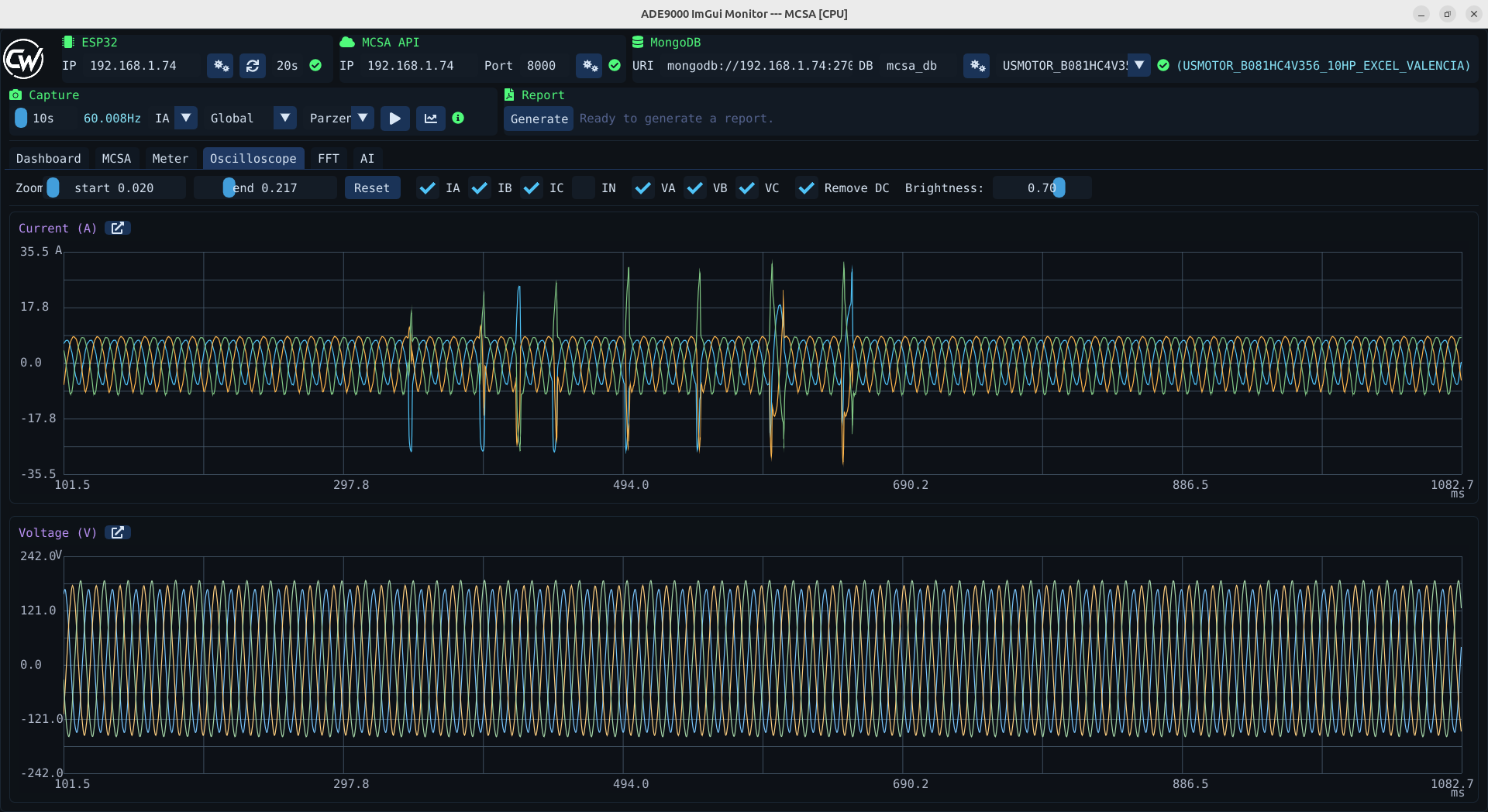
Synchronized voltage and current waveforms expose startup transients, abrupt mechanical overloads and phase asymmetry; STFT, wavelets and joint V-I tracks then reveal persistence without replacing global FFT gates.
Trust logic
Broken-bar and eccentricity flags require valid f0, poles, speed and slip, plus resolvable sidebands.
Impeller imbalance requires at least two corroborating signals across blade-pass, rotor asymmetry and current imbalance.
When DE and NDE characteristic frequencies are too close, the system reports ambiguity and requests physical inspection.
Two evidence paths
Immediate and historical diagnoses are separate services with separate evidence boundaries. Both use the same deterministic facts; only the historical path adds persistence and temporal context.
CAPTURE MODE
POST /diagnose_fftConsumes an FFT result in JSON and returns a deterministic, explainable report without reading or writing MongoDB. It is suitable for a live capture or an isolated engineering review.HISTORY MODE
POST /diagnose_historyAnalyzes a selected days, hours or last-N window, measuring fault persistence, health movement, bearing trends, pump evidence and maintenance urgency.Local AI explains these results after the deterministic assessment. It is not permitted to convert a rejected flag into a confirmed fault.
The measured asset
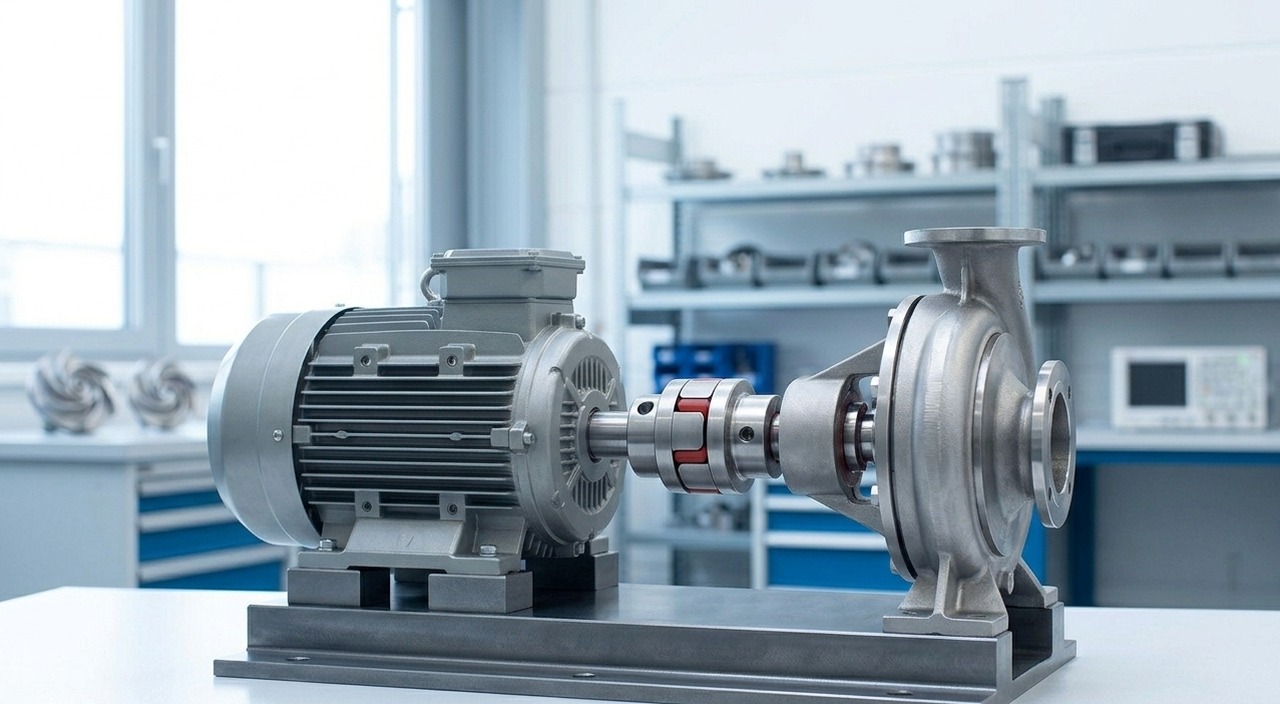
A marked bearing race, a misaligned coupling, an unbalanced impeller or a shifting hydraulic load all change the mechanical effort at the shaft, and that effort modulates the stator current. These are the parts of the machine that leave a signature, and how PumpSpectra reads each one.
01ACQUISITION POINT
02MOTOR · COUPLING · PUMP
03BEARING GEOMETRY
04MCSA-EDA
The animations above are technical illustrations of the monitored assembly. Measured results appear in the field section and in the interface captures further down.
Field validation
The method was evaluated on a motor-pump test campaign at Industrias Metalúrgicas EXCEL in Valencia, using a bearing geometry file with a 6309 at the drive end and a 6206 at the non-drive end. Of the 53 captures, 45 carry a group label from the campaign field notes and are summarised below; the remaining 8 were recorded without one and are counted in the dataset but not in these groups. The full paper is available in the technical library below.
G0
G1
G2
G3
What the campaign produced
The report leads with the actions so a reviewer can read the decision first and the numbers second. No capture reached the alarm threshold; the highest bearing evidence stayed just below it, and the report says so rather than rounding up to a fault.
DE and NDE both showed elevated BPFO/BPFI evidence, and MCSA could not rule either one out.
Drive-end evidence crossed the warning band while the non-drive end stayed below it.
Monitor-level elevation that never reached the warning threshold.
Real product interfaces
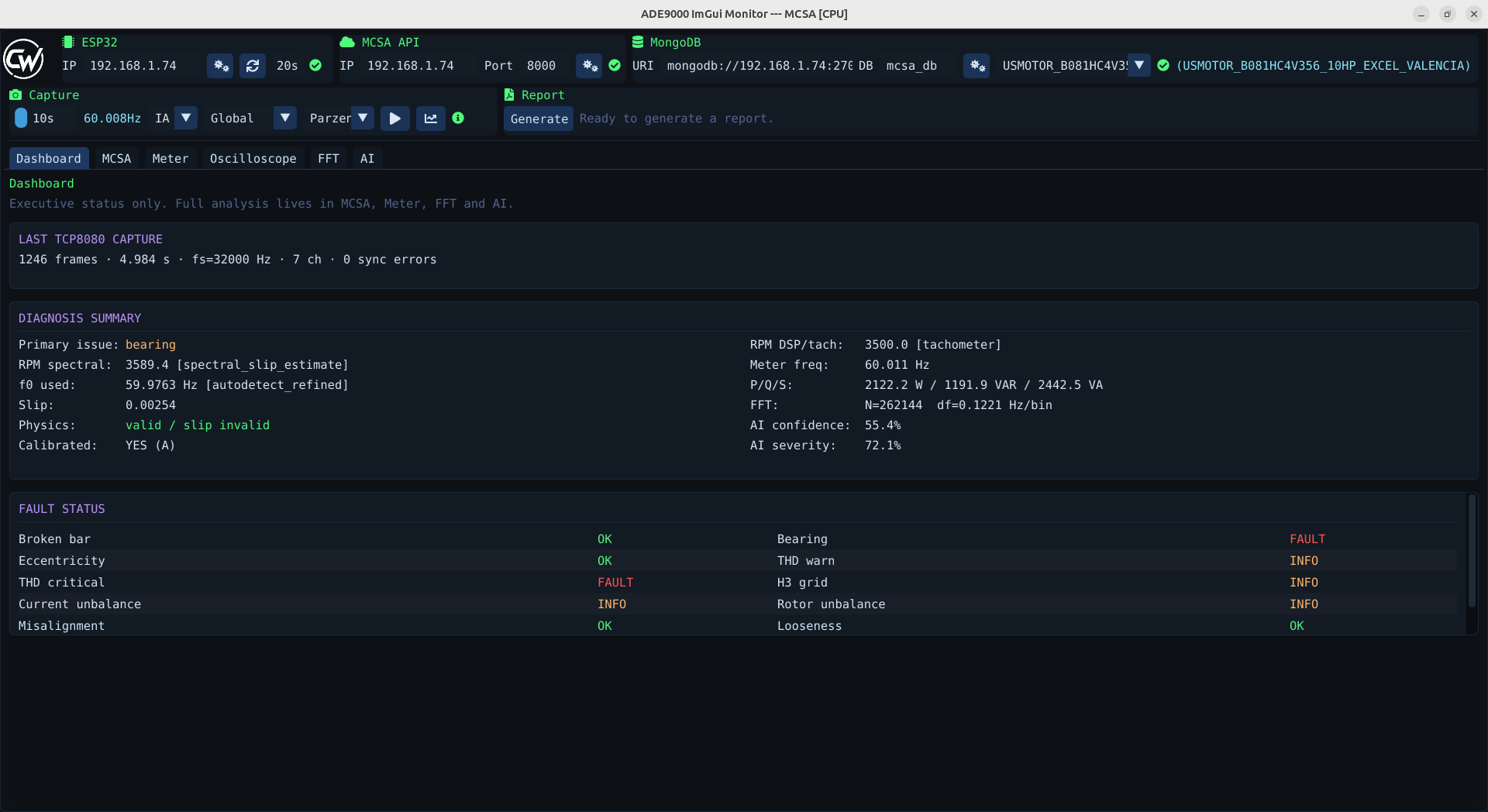
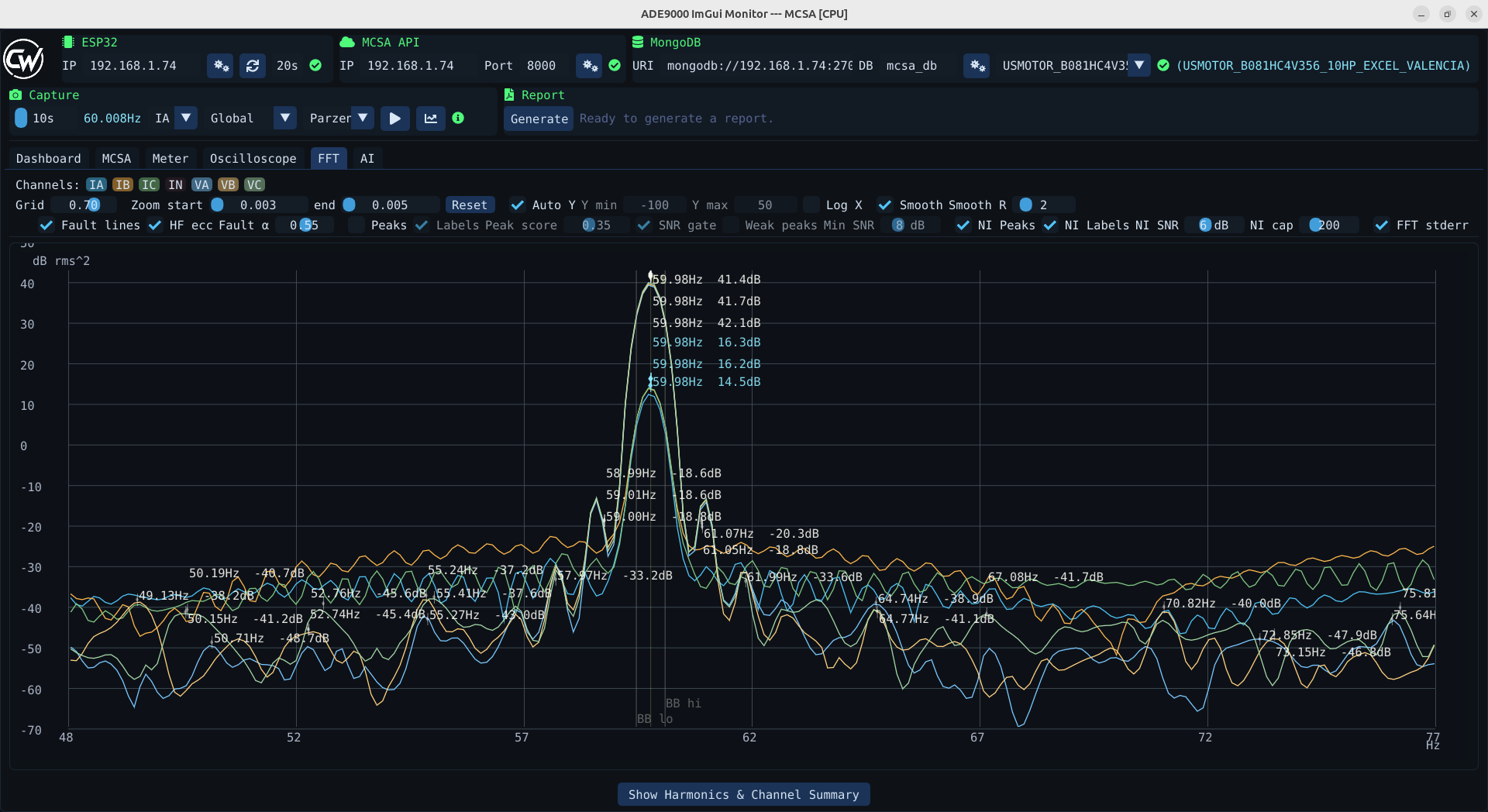
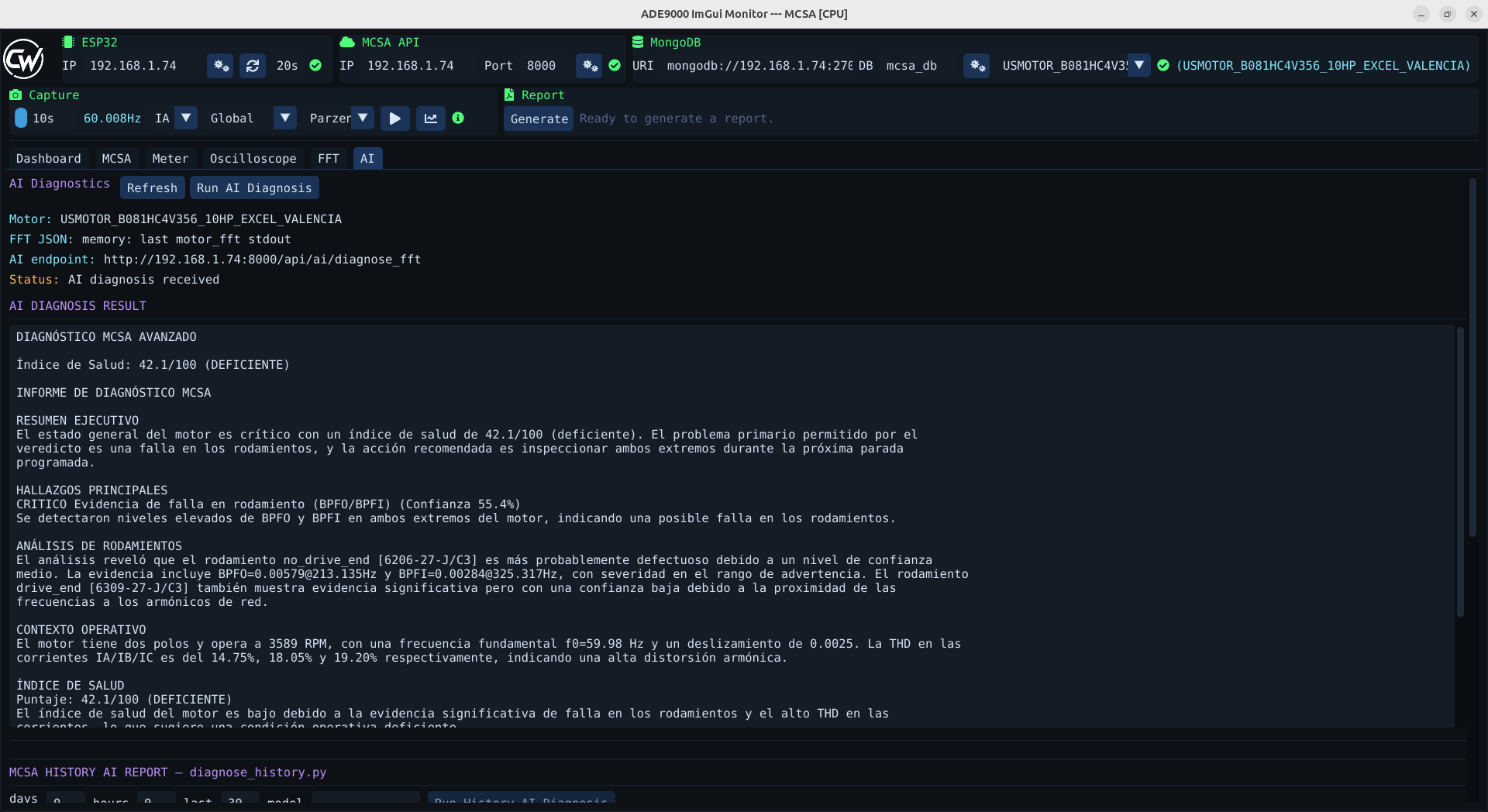
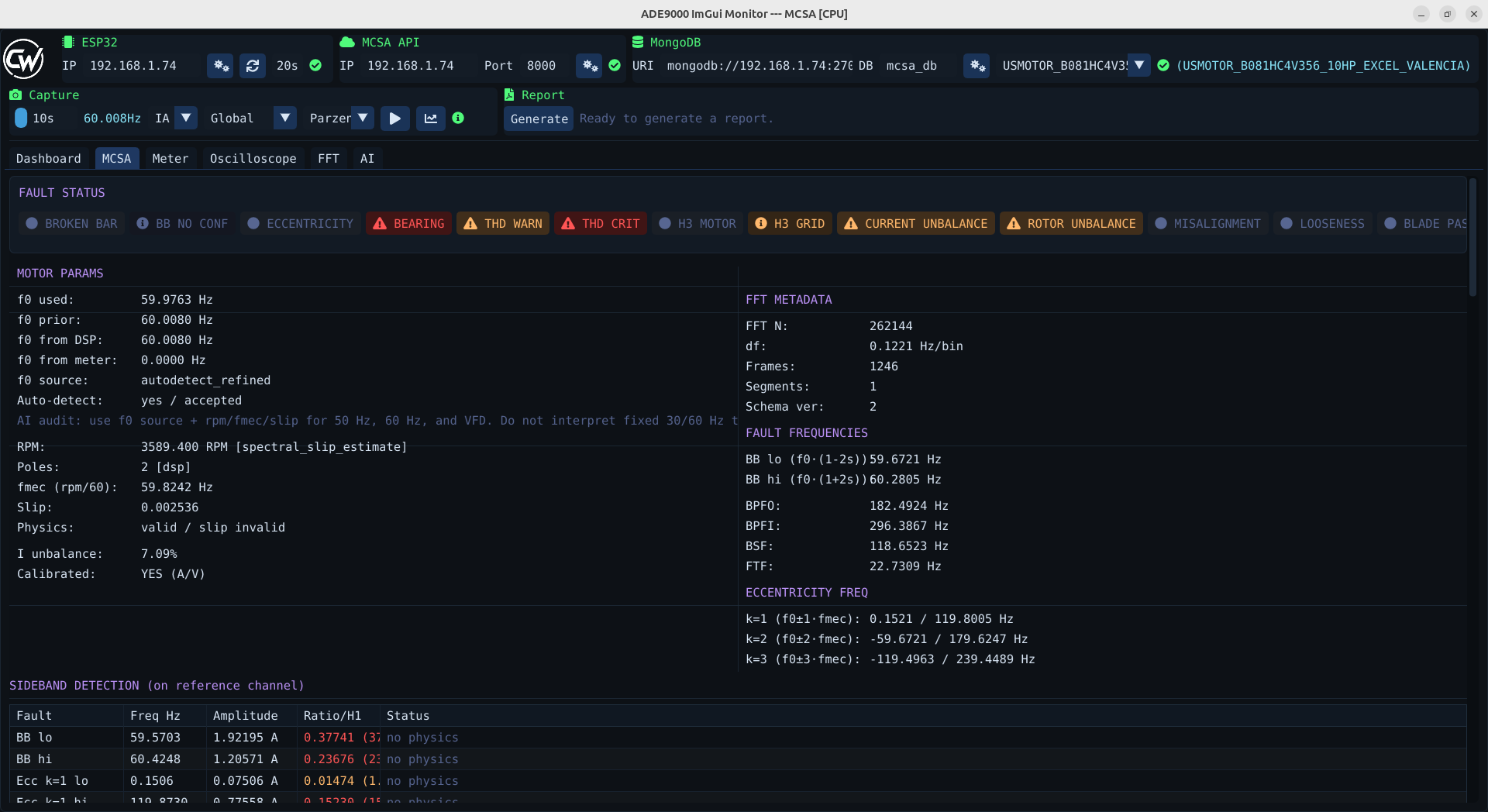
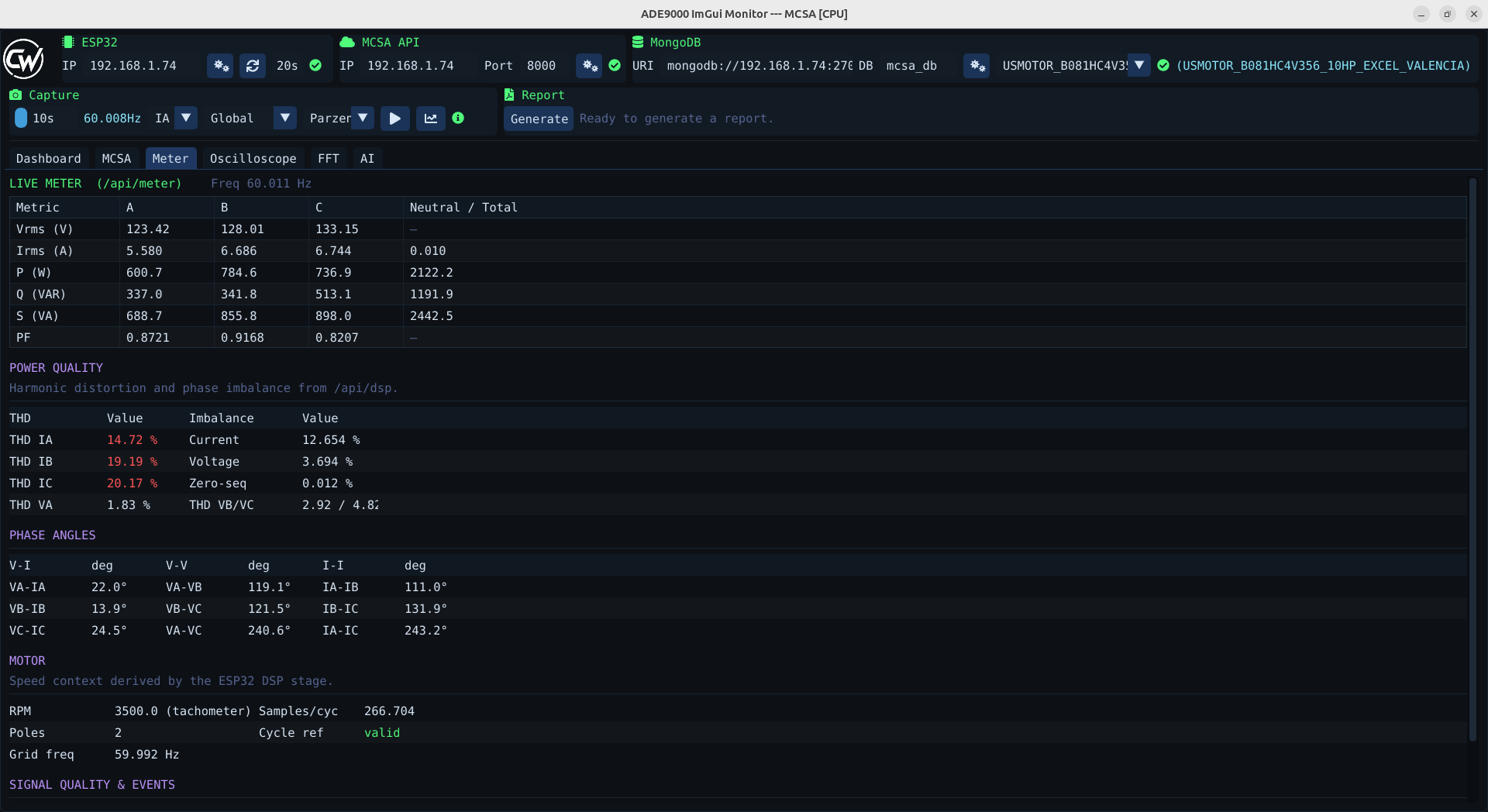
These are working PumpSpectra views—not conceptual dashboards. Open any image to inspect the original interface at full resolution.
Technical library
Download the field paper, product brief, verified acquisition API reference and standalone CPU-engine manual directly from this page.
Field research · English
Technical brief · Spanish
Firmware reference · English
CPU engine reference · English
Official & independent sources
Manufacturer documentation and independent research remain on their publishers' sites. These links provide engineering context and do not imply SPICA authorship or third-party endorsement.
Bring the signal into focus